Launch offer — valid today only

📄 Digital book in PDF · read it on your phone or print it

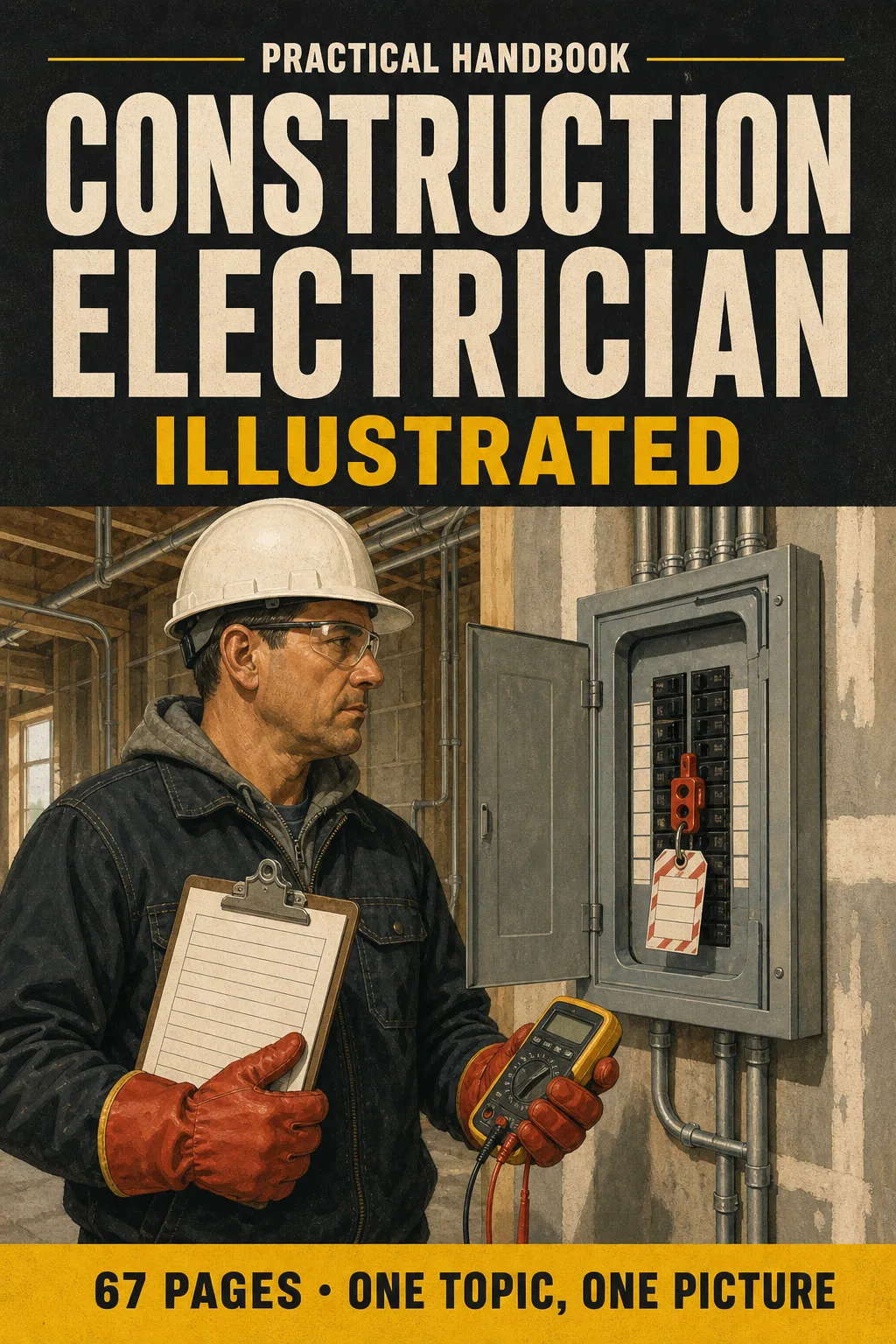
The 309A Exam in Drawings: Size, Ground and Calculate by the Canadian Code, Always in the Same Steps One Topic on Every Page

Ohm's law, three-phase, conductor sizing, voltage drop, grounding and bonding, services, transformers and motor control. Each topic has its own page: the drawing first, then what you need to remember. 67 illustrated pages.

START STUDYING THIS WAY

🔒 Secure checkout · PDF by email · 30-day guarantee

Every topic, its own pageEvery calculation and Code lookup drawn, with the explanation beside it
67 illustrated pages9 parts, from Ohm's law to the night before the exam
Up-to-date sourcesCanadian Electrical Code Part I, the Red Seal Occupational Standard for Construction Electrician and the exam prep guide
PDF by emailFormat

Look Inside the Book

Every page has one big drawing and a box with the numbers, rules and steps you need to know:

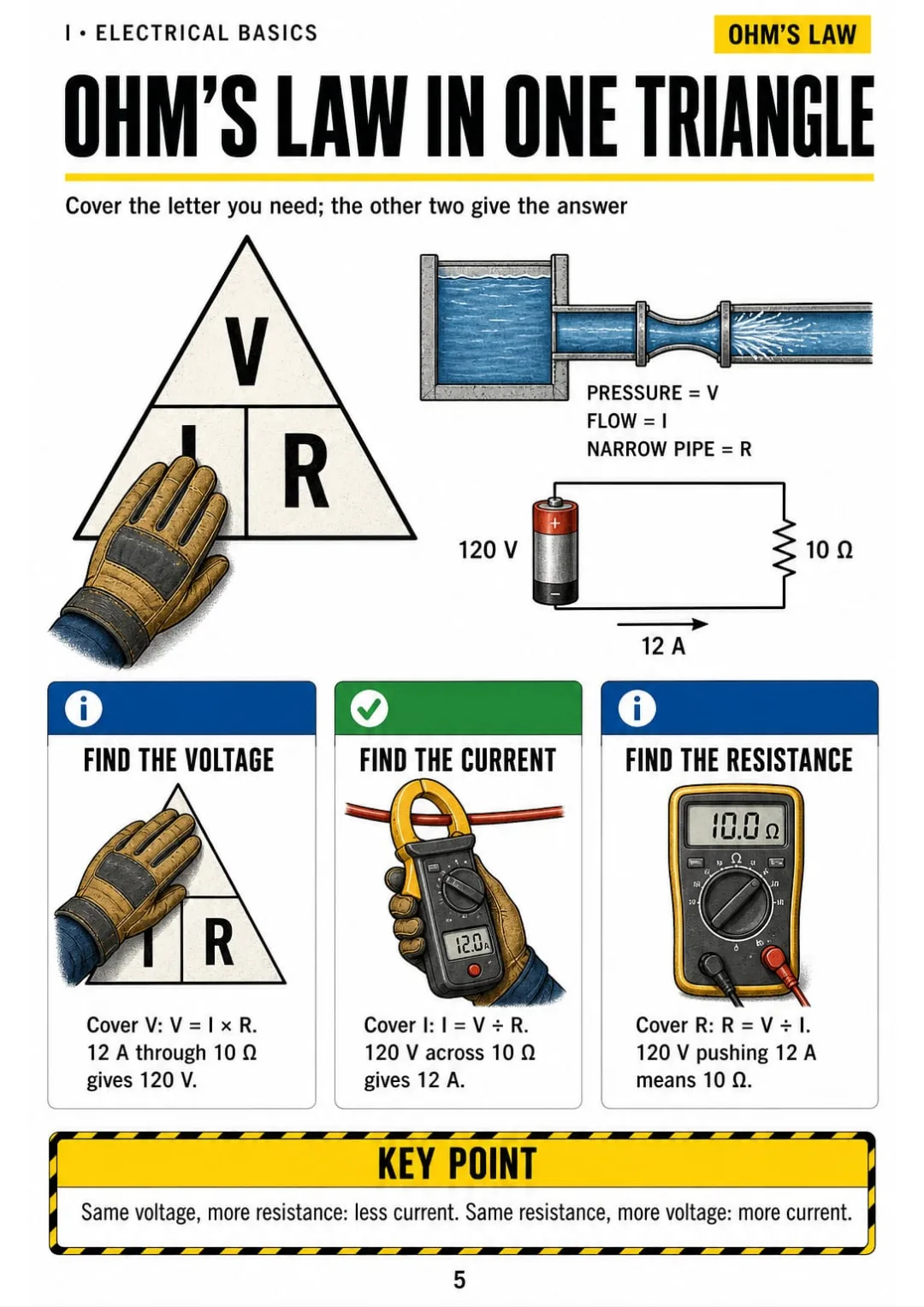
V = I × R: 120 V across 10 Ω gives 12 A, drawn as a triangle and a pipe.
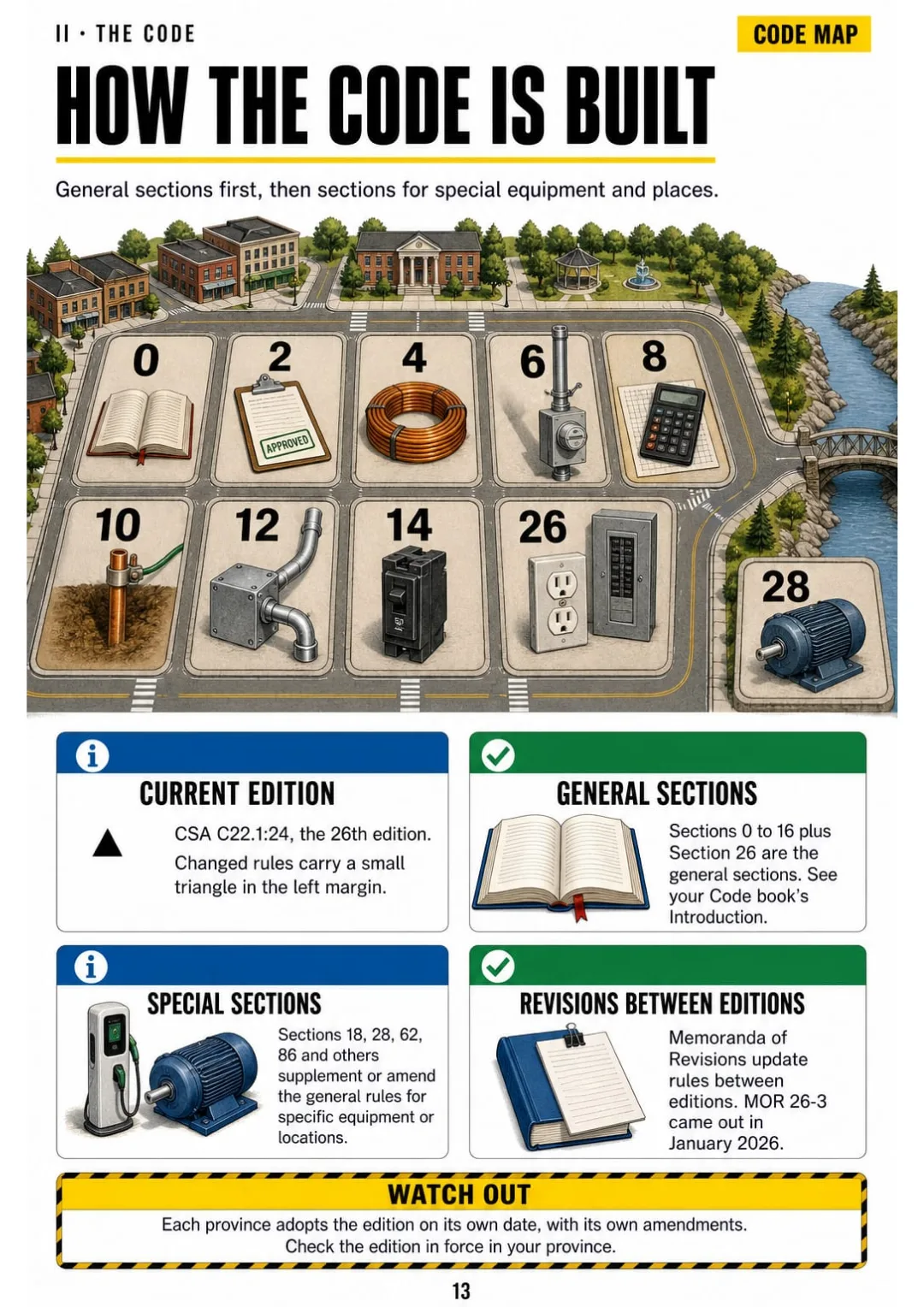
C22.1:24, 26th edition: Sections 0–16 and 26 are general; the rest supplement them.
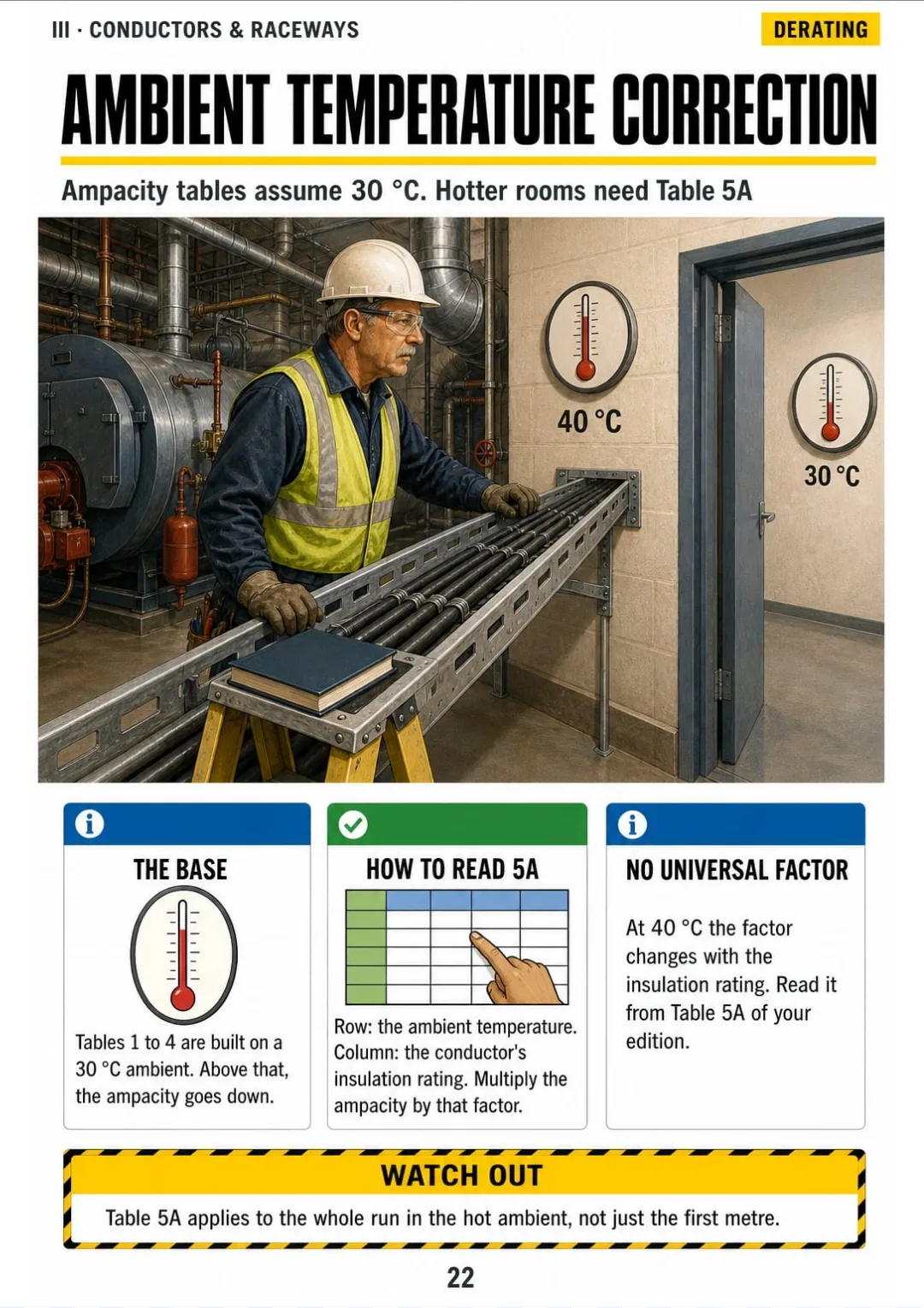
Ampacity tables assume 30 °C; above that, apply the Table 5A factor
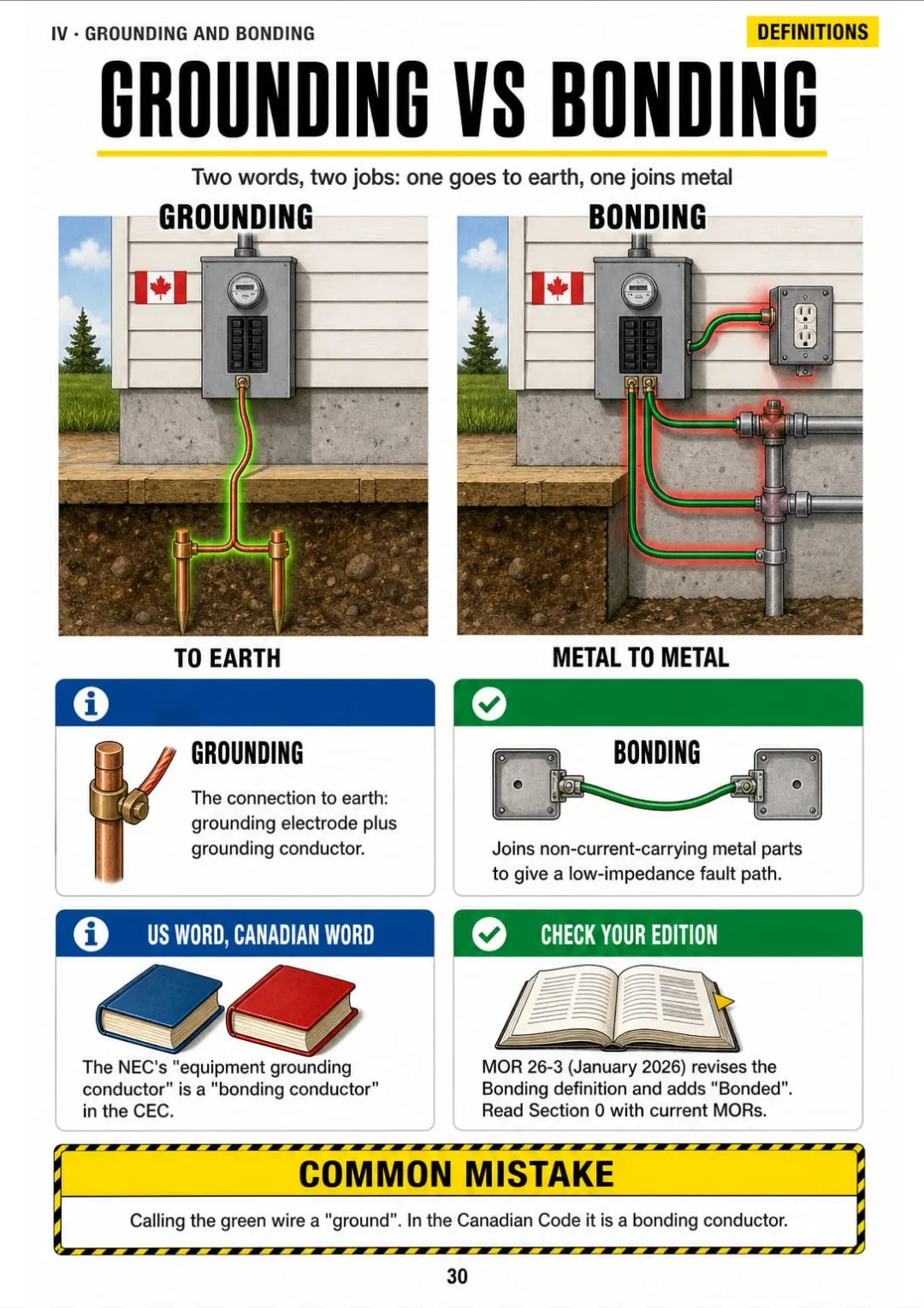
Grounding = connection to earth. Bonding = metal parts joined in a low-impedance fault path.
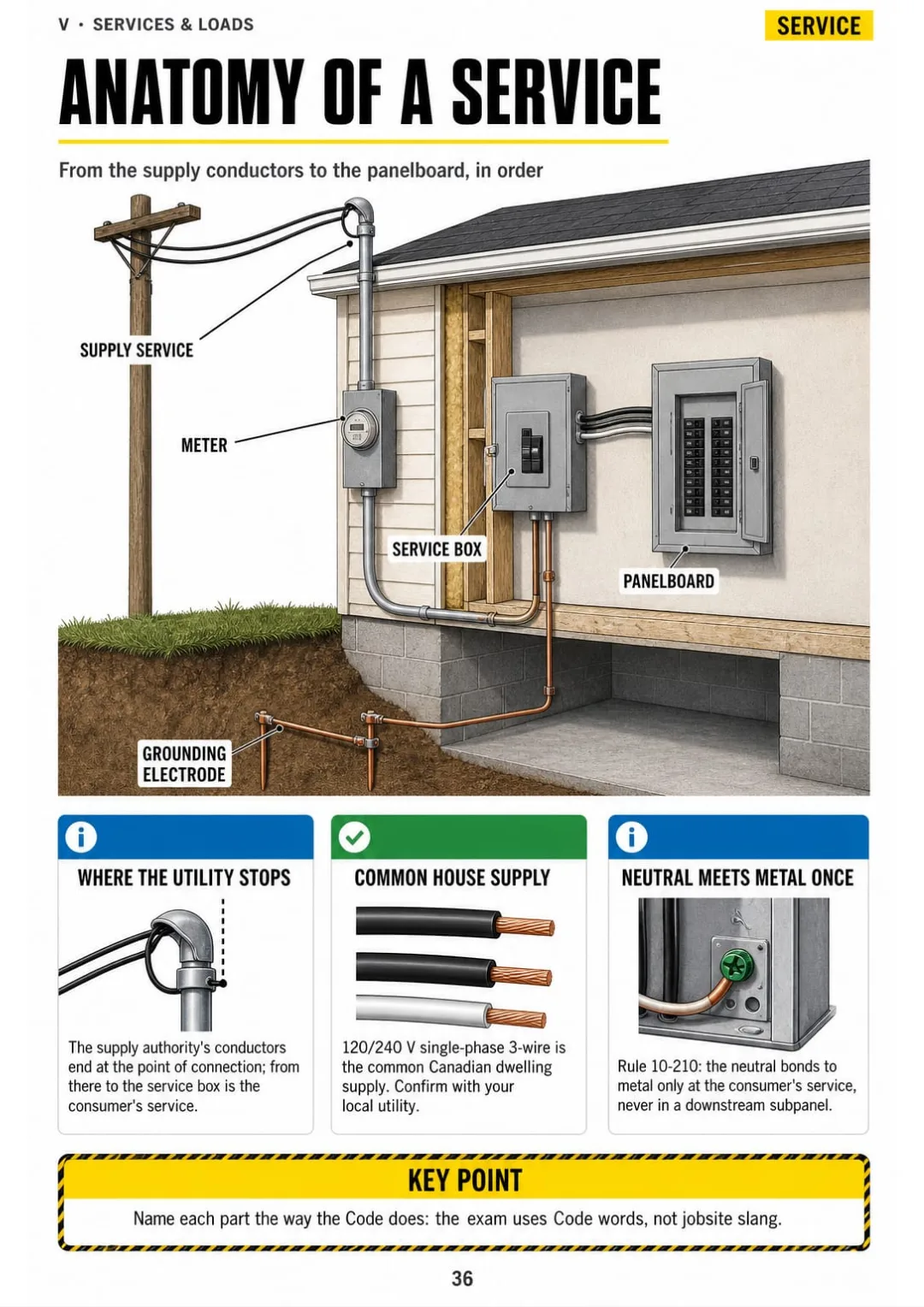
Supply, meter, service box, panelboard and grounding electrode: one drawing, five labels.
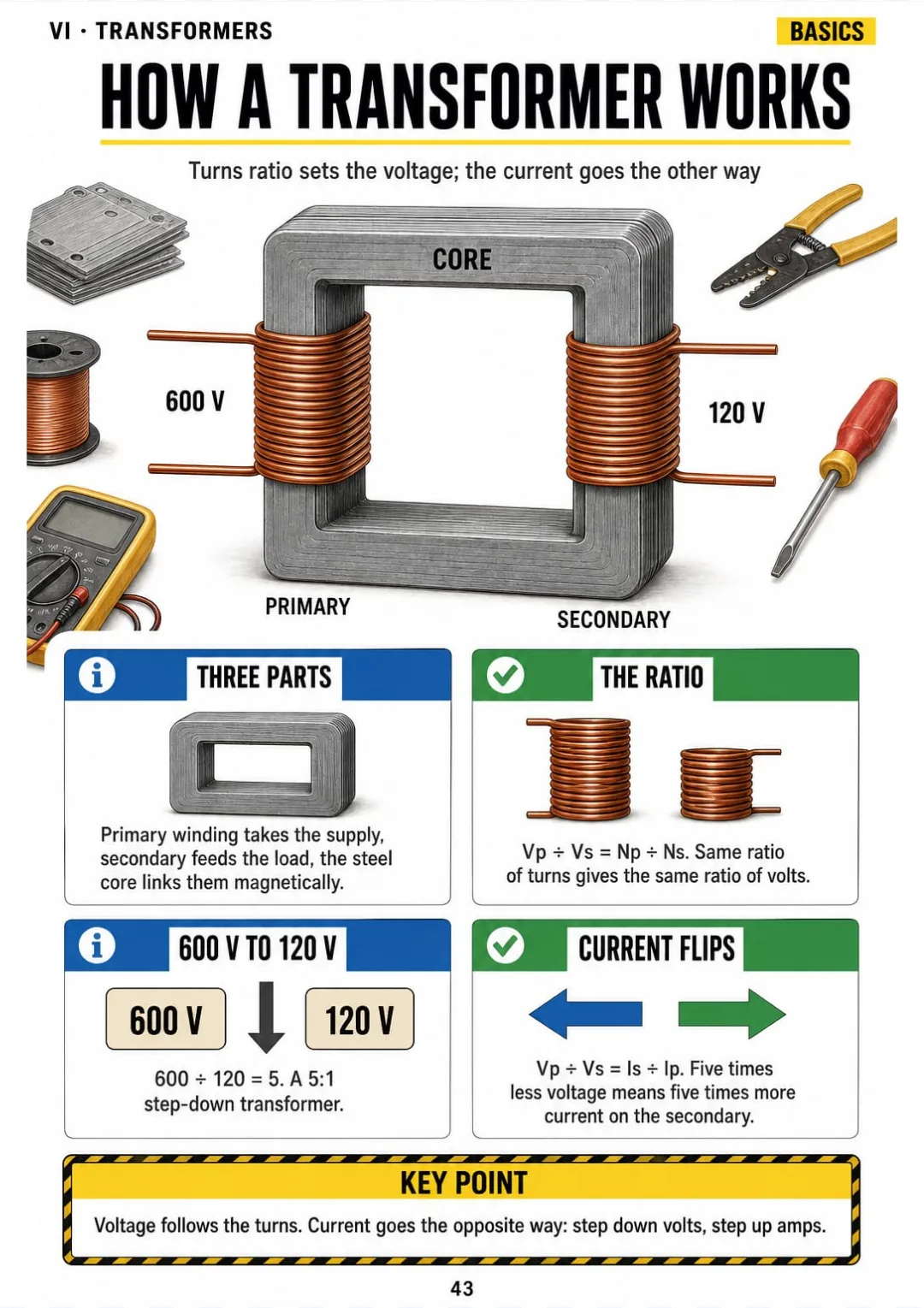
600 V to 120 V = 5:1 ratio, and the secondary carries five times the current.
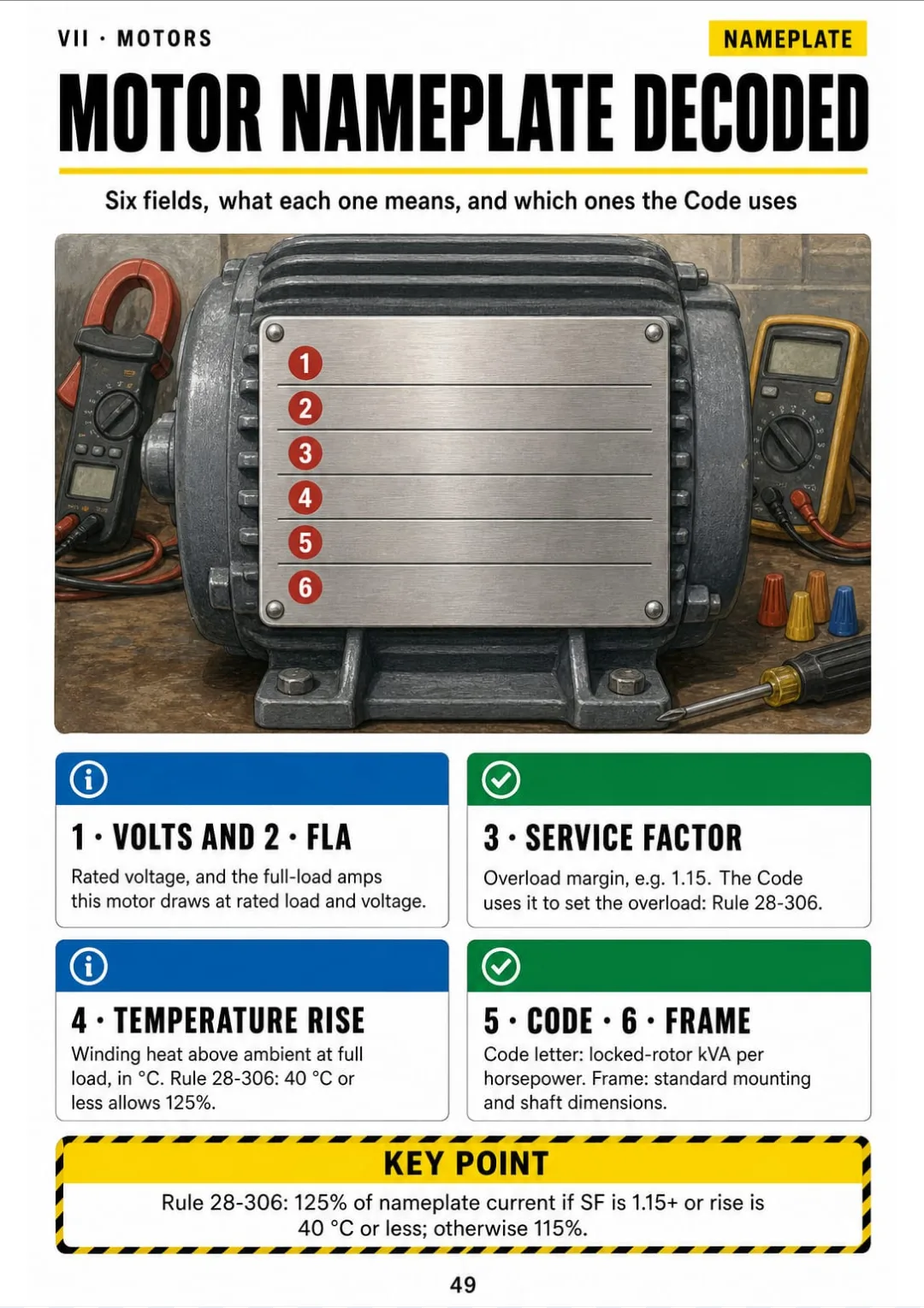
Volts, FLA, service factor, temperature rise, code letter and frame, each one drawn and explained.
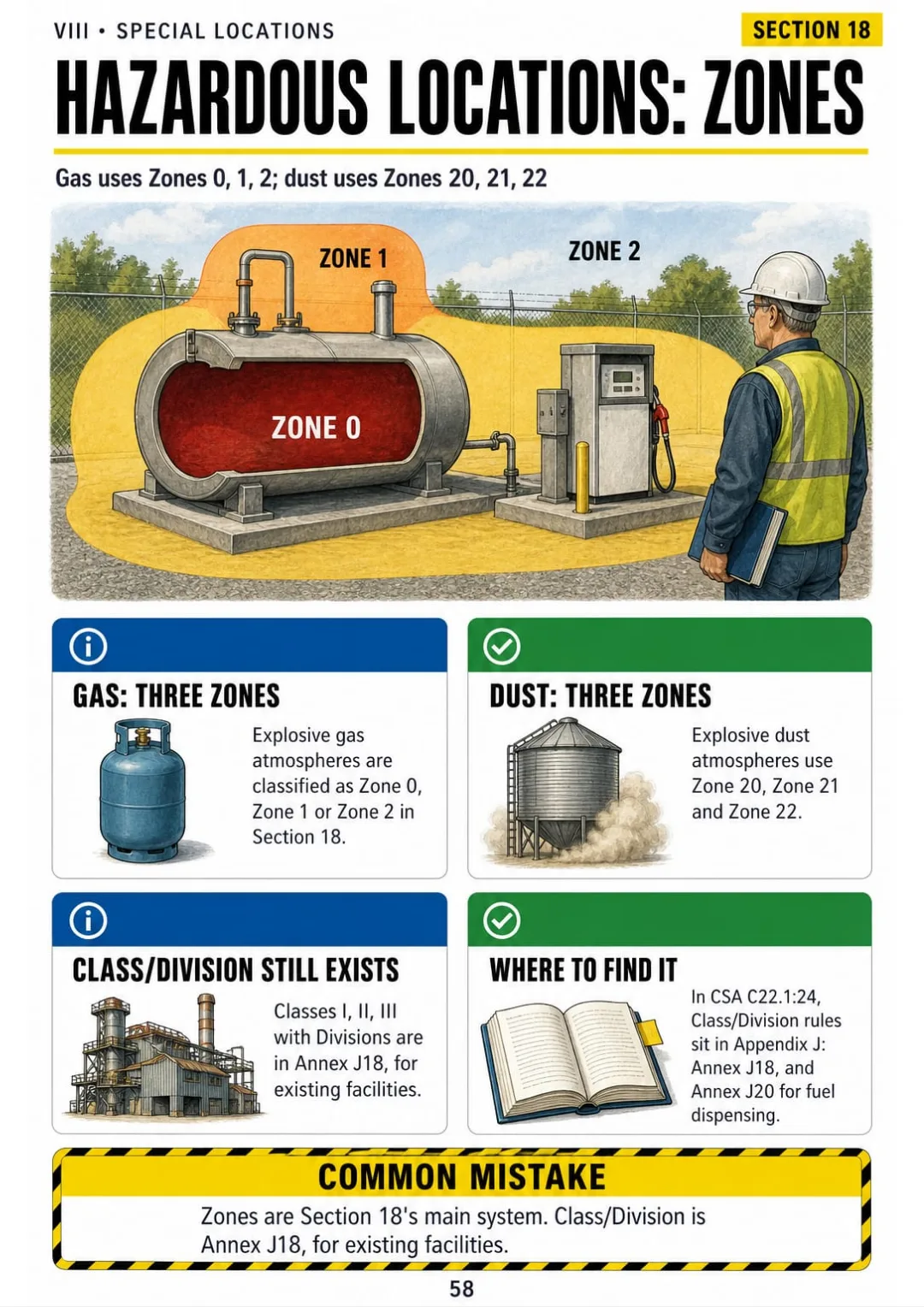
Section 18: Zones 0, 1, 2 for gas, 20, 21, 22 for dust; Class/Division in Annex J18

Swipe to see more →

These are real pages from the book. The table of contents is the full one: 9 parts and 63 topics.

The Problem Isn't You. It's How It Was Explained to You.

You're looking at an exam question: size the copper for a feeder, six current-carrying conductors in one conduit, 75 °C lugs. On site you'd pick the wire without thinking. Here you can't decide which number to start from.

Your notes cover it in one long block: ampacity, insulation rating, termination limits, derating, all mixed together. Nothing tells you what comes first, so you pick a column and hope.

Ampacity tables assume 30 °C; above that, apply the Table 5A factor

In the book, conductor sizing is one page: five steps drawn in order. No. 3 copper: 115 A at 90 °C, 92 A once six conductors share the conduit, still under the 100 A that 75 °C lugs allow.

Ambient temperature correction, voltage drop, conduit fill, box fill, sizing the bonding conductor: each one has its own page, drawn the same way.

You see the steps, you follow them in the same order, and you size the run on the exam the way you do on site, without going back to the textbook.

COMPARE FOR YOURSELF

Same Topic, Two Ways to Study It

THIS
  • The textbook: line after line
  • The Code's structure explained only in words
  • You walk into the exam unsure where to look
Before applying any requirement, the student should understand how the Code is organized. The document is arranged in a series of Sections, some of which apply to every installation while others address particular equipment, occupancies or conditions. Where a specific Section and a general one appear to conflict, the specific Section normally governs. Rules are referenced by Section and number and must be read together with the relevant Tables, Diagrams and Appendices, keeping in mind that explanatory notes are informative rather than mandatory.
FOR THIS
  • The Code's layout in one drawing
  • The general and supplementary Sections in a box
  • You see it and you get it
C22.1:24, 26th edition: Sections 0–16 and 26 are general; the rest supplement them.
CONTENTS

Take a Look at the 9 Parts and 63 Topics

Electrical basics, finding a rule in the Code, conductors and raceways, grounding and bonding, services and load calculations, transformers, motor control, special locations and exam review: 67 pages, all illustrated

IElectrical Basics, Drawn · pp. 5-12
  1. Ohm's Law in One Triangle
  2. Power: Watts, Volts and Amps
  3. Series Circuits
  4. Parallel Circuits
  5. Combination Circuits Step by Step
  6. AC Basics: 60 Hz, RMS and Peak
  7. Three-Phase: Wye and Delta
  8. Power Factor Without the Headache
IIFinding a Rule in the Code · pp. 13-20
  1. How the Code Is Built
  2. Reading a Rule Number
  3. The Index First, Then the Rule
  4. Appendix B and Appendix D
  5. Definitions That Change the Answer
  6. Ampacity Tables: Which Column
  7. The 80% Continuous Load Rule
  8. Tabbing Your Code Book
IIIConductors, Raceways and Boxes · pp. 21-29
  1. Conductor Sizing in Five Steps
  2. Ambient Temperature Correction
  3. More Than Three Conductors
  4. Voltage Drop: The Limits
  5. Voltage Drop: The Calculation
  6. Conduit Fill
  7. Box Fill
  8. Conduit Bending Basics
  9. Conductor Colours in Canada
IVGrounding and Bonding · pp. 30-35
  1. Grounding vs Bonding
  2. The Fault Path
  3. Grounding Electrodes
  4. Sizing the Grounding Conductor
  5. Sizing the Bonding Conductor
  6. Where Neutral and Ground Meet
VServices, Panels and Load Calculations · pp. 36-42
  1. Anatomy of a Service
  2. Single Dwelling Load: Basic Load
  3. Single Dwelling Load: Range, Heat and Extras
  4. Minimum Service Size
  5. Apartment and Commercial Loads
  6. Overcurrent Devices
  7. GFCI and AFCI Protection
VITransformers · pp. 43-48
  1. How a Transformer Works
  2. Single-Phase Transformer Calculations
  3. Three-Phase Transformer Calculations
  4. Delta-Wye Connections
  5. Protecting a Transformer
  6. Buck-Boost and Polarity
VIIMotors and Motor Control · pp. 49-57
  1. Motor Nameplate Decoded
  2. Motor Full-Load Current Tables
  3. Motor Branch Circuit Conductors
  4. Motor Overload Protection
  5. Motor Short-Circuit Protection
  6. Start-Stop Ladder Diagram
  7. Two-Wire vs Three-Wire Control
  8. Jog and Forward-Reverse
  9. Timers and Reduced-Voltage Starting
VIIISpecial Locations and Systems · pp. 58-61
  1. Hazardous Locations
  2. Wet and Damp Locations
  3. Emergency and Fire Alarm Systems
  4. EV Chargers and Solar
IXExam Review · pp. 62-67
  1. How the 309A Exam Works
  2. The Calculation Checklist
  3. Canadian Code vs US Habits
  4. Metric Conversions on the Job
  5. Most Frequent Mistakes
  6. The Night Before

One Page, One Topic, All Clear

Think of it this way:

It's the week before your 309A, and a practice question gives you a 600 V to 120 V transformer and asks for the secondary current. You know this from the job, but the numbers won't line up on paper.

You open the transformer page and see it drawn: two windings, a 5:1 ratio and the secondary carrying five times the current, with a worked example beside it. On exam day, you picture the page instead of guessing.

Supply, meter, service box, panelboard and grounding electrode: one drawing, five labels.

Same with Ohm's law, grounding vs bonding, the anatomy of a service, the motor nameplate and hazardous locations: each one on its own page.

Construction Electrician Illustrated is 9 parts and 63 topics, all drawn, with an exam review part at the end: the calculation checklist, Canadian Code vs US habits and the most frequent mistakes.

What you see drawn, you don't have to memorize.

What's Inside Construction Electrician Illustrated:

Ipp. 5-12

Electrical Basics, Drawn

Ohm's law, power, series, parallel and combination circuits, AC basics, three-phase wye and delta, power factor.

IIpp. 13-20

Finding a Rule in the Code

How the Code is built, reading a rule number, index first, Appendices B and D, the definitions that change the answer, which ampacity column to read, the 80% rule, the Code numbers worth knowing by heart.

IIIpp. 21-29

Conductors, Raceways and Boxes

Size any run the same way every time: five steps drawn in order, temperature and conductor-count corrections, voltage drop, conduit and box fill, bending basics and Canadian conductor colours.

IVpp. 30-35

Grounding and Bonding

Grounding vs bonding, the fault path, grounding electrodes, sizing the grounding and bonding conductors, where neutral and ground meet.

Vpp. 36-42

Services, Panels and Load Calculations

Anatomy of a service, single dwelling load step by step, minimum service size, apartment and commercial loads, overcurrent devices, GFCI and AFCI protection.

VIpp. 43-48

Transformers

How a transformer works, single-phase and three-phase calculations, delta-wye connections, transformer protection, buck-boost and polarity.

VIIpp. 49-57

Motors and Motor Control

The motor nameplate, full-load current tables, branch circuit conductors, overload and short-circuit protection, start-stop, two-wire vs three-wire, jog, forward-reverse, timers and reduced-voltage starting.

VIIIpp. 58-61

Special Locations and Systems

Hazardous locations, wet and damp locations, emergency and fire alarm systems, EV chargers and solar.

IXpp. 62-67

Exam Review

How the 309A exam works, the calculation checklist, Canadian Code vs US habits, metric conversions on the job, the most frequent mistakes and the night before.

At the end of the book: An exam review part with the calculation checklist, Canadian Code vs US habits and the most frequent mistakes.
Plus: 2 Free Books

Exam-Style Practice Questions with Worked Answers

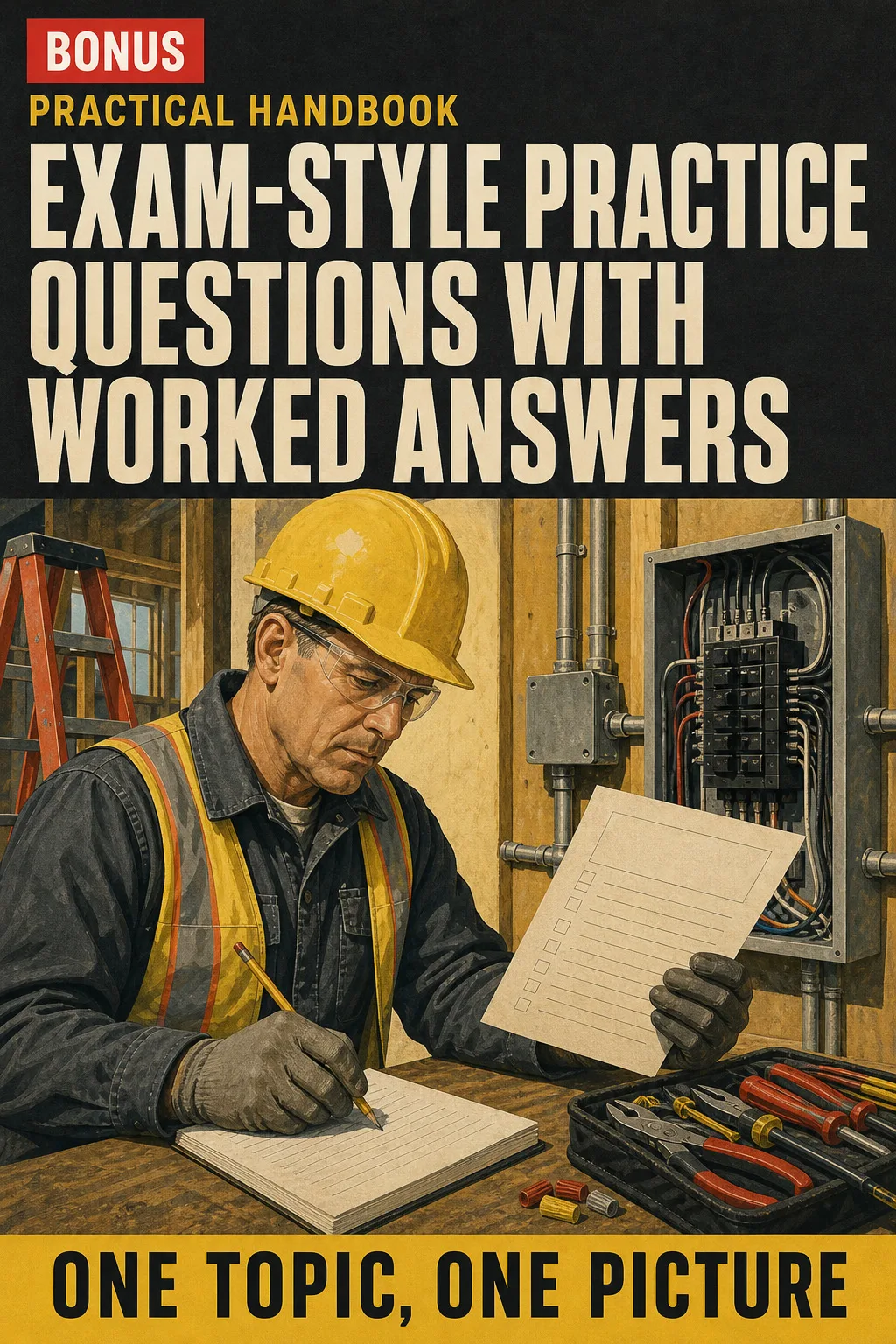
BONUS 1: «Exam-Style Practice Questions with Worked Answers»

Value on its own: US$ 17.90

Multiple-choice questions in the style of the trade exam, each answer explained step by step, so you can see where you hesitate before exam day.

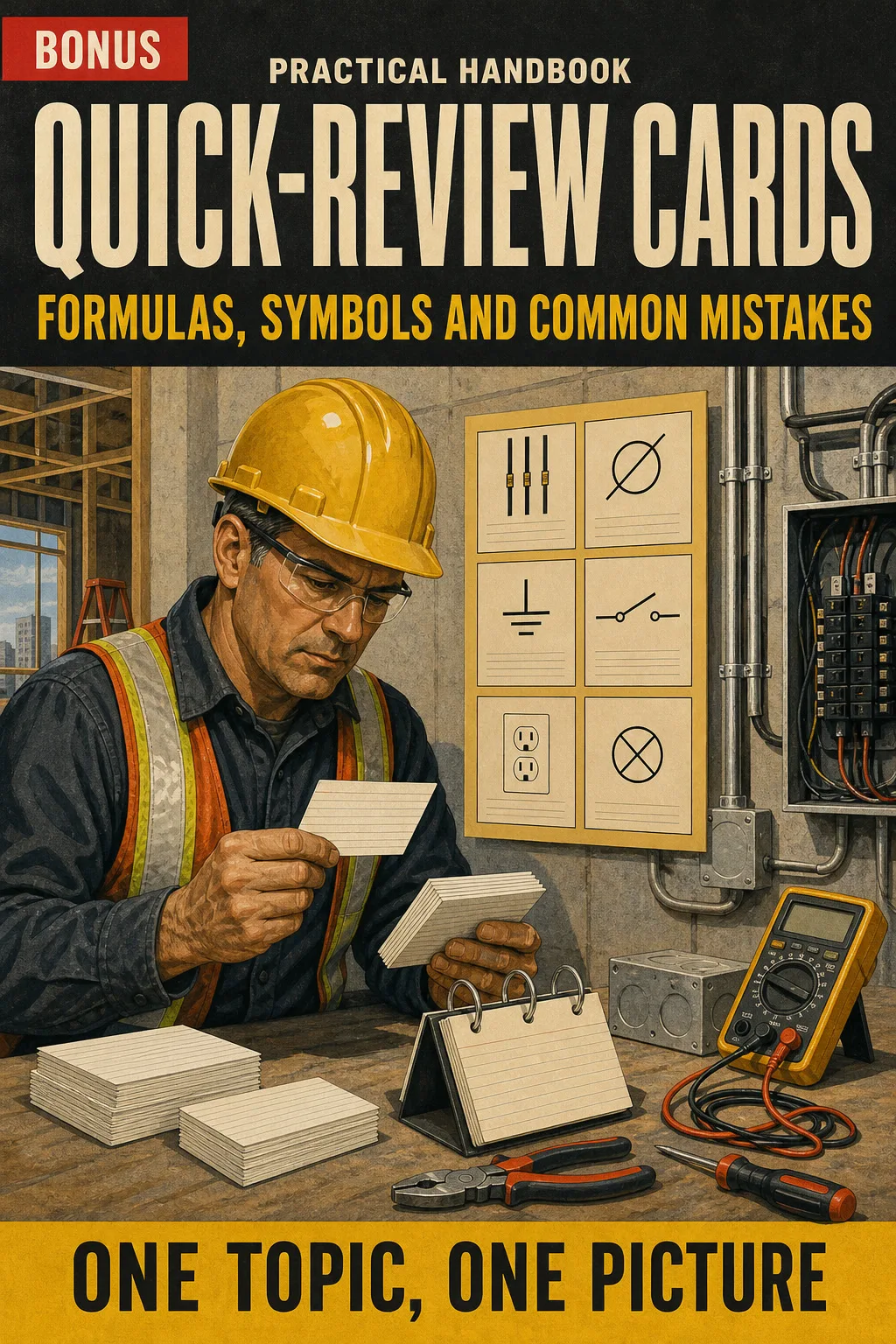
Quick-Review Cards: Formulas, Symbols and Common Mistakes

BONUS 2: «Quick-Review Cards: Formulas, Symbols and Common Mistakes»

Value on its own: US$ 14.90

The formulas, drawing symbols and most frequent mistakes on printable cards, to review at a glance on your break or the night before.

Construction Electrician Illustrated with 2 Free Books

  • Construction Electrician Illustrated: 67 illustrated pagesUS$ 63
  • BONUS 1: Exam-Style Practice Questions with Worked AnswersUS$ 17.90
  • BONUS 2: Quick-Review Cards: Formulas, Symbols and Common MistakesUS$ 14.90
  • High-resolution PDF to printIncluded
Total value US$ 95.80
YOUR PRICE:
US$ 27
You save US$ 68.80
YES, I WANT CONSTRUCTION ELECTRICIAN ILLUSTRATED FOR US$ 27

📄 This is a digital PDF book sent to your email: nothing is printed or shipped.

Secure purchaseEncrypted payment30-day guarantee

PDF by email: We email you Construction Electrician Illustrated as a PDF, together with the two free books. It's a single payment: no installments, no extra charges.

Who This Book Is For

You're in your apprenticeship

You're in your apprenticeship

Every block of school theory has its page, drawn, so what you studied at night still makes sense in the morning.

Your 309A is coming up

Your 309A is coming up

The whole syllabus in order, every calculation in the same steps, and the Code pages that show you where to look and which column to read.

You already work in the trade

You already work in the trade

Trained outside Canada or years on the tools: the Canadian Code, metric sizes and Canadian terms, one page at a time, to review on your break.

Everything You Get Today

US$ 95.80US$ 27
YES, I WANT CONSTRUCTION ELECTRICIAN ILLUSTRATED FOR US$ 27

📄 This is a digital PDF book sent to your email: nothing is printed or shipped.

30DAYS
GUARANTEE

30-Day Guarantee

Try Construction Electrician Illustrated for 30 days, bonus books included.

We refund everything if the file won't open, if the book isn't what you see here, if you were charged twice or if the email doesn't arrive. Just email us.

You pay once. No subscriptions.

Frequently Asked Questions

Is it for me if I already work in the trade and I'm getting ready for the 309A?

Yes. It isn't a beginner's book: it puts the exam topics in order, built on the Canadian Electrical Code, Part I, and metric units, not the US NEC. 309A is Ontario's trade code for this electrician; the certifying exam is the interprovincial Red Seal Construction Electrician exam, the same one used by the other provinces and territories in the program. Some provinces add their own amendments to the Code: check them with your apprenticeship authority. It works for apprentices finishing up and for electricians trained outside Canada.

Where does the content come from?

It's checked against the current edition of the Canadian Electrical Code, Part I, the Red Seal Occupational Standard for Construction Electrician and the Red Seal exam preparation guide. 309A is Ontario's trade code for the same electrician; the exam is the Red Seal Construction Electrician exam.

Is this official material?

No. It's an independent study book, not affiliated with or endorsed by CSA Group, the Red Seal program or any provincial apprenticeship authority. It doesn't reproduce the Code: it shows you how to find a rule and read a table, so you still need your own Code book.

Does it replace my apprenticeship training or technical school?

No. It's a study and review aid that works alongside your training, your hours on the job and the Code itself. It doesn't give you a certificate and doesn't count toward your apprenticeship hours or your trade qualification.

Are the practice questions the ones on the exam?

No. They're written for this book in the style of a trade exam, with every answer worked out step by step. They aren't official exam questions.

When and how does it arrive?

The book and the 2 bonus books arrive as a PDF by email, at the address you enter at checkout.

Do I have to pay every month?

No. It's a one-time payment, with no subscription.

Can I have it on paper?

Yes. The PDF prints well at home or at a print shop, so you can keep the pages in your truck or lunch bag.

How does the refund work?

You have 30 days. We refund everything if the file won't open, if the book isn't what you see on this page, if you were charged twice or if the email doesn't arrive: just email us.

Before You Close This Page

No more rereading without it sticking.

Conductor sizing: you see it drawn in five steps, and that's it.

You walk into the 309A knowing where everything is.

Drawings make studying faster.

The book is right below.

One-time payment: US$ 27 · Guarantee: 30 days · PDF by email

YES, I WANT CONSTRUCTION ELECTRICIAN ILLUSTRATED FOR US$ 27

📄 This is a digital PDF book sent to your email: nothing is printed or shipped.